Check the return before taking the crate
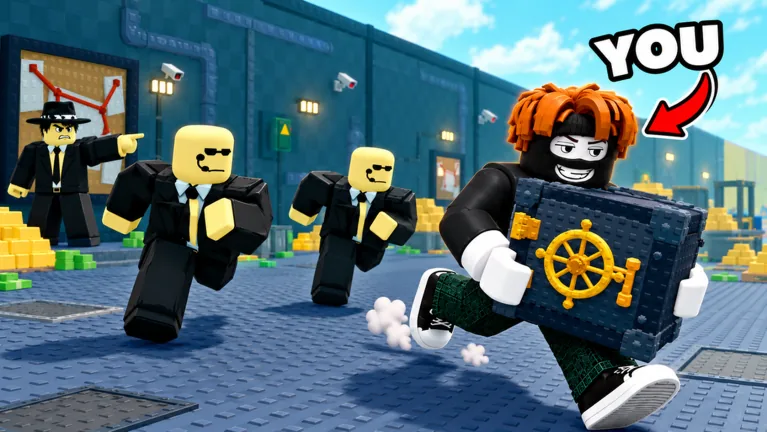
Walk the route back to your own plot before picking up an NPC’s crate. Once you take it, the run warning and pursuit make that return the immediate task. A crate you can reach is only a useful target if you can also bring it home.
Begin with a nearby target and repeat that journey until you recognize the pickup point, the turn toward the hub and your plot entrance. You can compare more distant districts after that short route becomes familiar.
Identify the target and its interaction
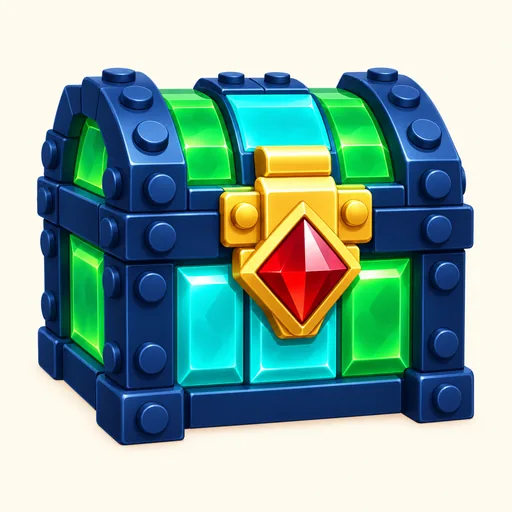
Look for the crate beside the NPC in the named area. The starter tutorial leads toward Grandpa, while Jeweler and later districts have their own area headers and themed targets. Use the visible crate interaction to confirm which object you are trying to take.
On desktop, a crate can display an E Steal prompt. Follow the prompt shown on your device rather than assuming every object or menu uses the same input. If you are still learning the interface, keep the controls guide open for the distinction between interactions, the carrying button and ordinary menu navigation.
Do your route check before triggering that interaction. Stand at the pickup point, turn toward home and identify an obvious street feature you can recognize again. Then take the crate and use that orientation immediately. Opening Index or browsing a shop can wait until you have finished carrying.
Read the carrying state
While you carry a crate, the screen shows a warning to run and a Drop control. Treat those as different parts of the interface: the warning concerns the return, while Drop is an action you can deliberately choose. Do not press it simply because you cannot find an opening button on the crate.
| Situation | Next action |
|---|---|
| You are inspecting a target crate | Check its Steal prompt and the direction home |
| The crate is in your hands | Follow the return you prepared |
| A run warning is visible | Keep your attention on movement and the route |
| You have reached your plot | Place the crate and read its appraisal state |
| You repeatedly fail the same return | Train more, then test that same journey again |
The home hub has a Safe Zone label and recognizable base entrances. Use those as navigation landmarks. Follow the game messages during a chase rather than assuming the label grants protection everywhere nearby or guarantees that an NPC has stopped pursuing you.
Compare attempts without changing everything
If a route is difficult, use the treadmill before another attempt at the same target. Keeping the destination unchanged helps you judge the effect of your preparation. Switching to a farther area at the same time gives you a different journey and makes that comparison harder.
Remember where the attempt became awkward. Losing your orientation calls for another walk through the route; struggling with the return calls for a look at Speed training. Neither problem needs a guessed numerical requirement. Judge the actual pickup and return you are trying to complete.
A new area is a separate decision. Check its header and look back toward the district you came through before taking a crate there. The darker Mafia Boss streets, fossil decorations in Archeologist and water around Pirate Captain provide different landmarks; learn the specific area instead of treating every street as interchangeable.
Finish the delivery before planning another theft
Place the returned crate at your own plot and check whether appraisal is still running. That delivery finishes the acquisition task. Opening the ready crate and displaying its treasure come afterward, and are explained in the opening guide.
Keep each theft attempt focused on one target and one return. Once that return feels familiar, decide whether to train more or try another region.
FAQ
Where should I try my first theft?
Follow the starter tutorial toward the nearby Grandpa target. Learn that return and your own plot entrance before trying a district you cannot navigate yet.
Which button takes a crate on desktop?
Use the crate’s displayed E Steal interaction when it appears. Read the current prompt instead of assuming a menu button performs the same action.
Why can I not open the crate while running home?
The carrying stage comes before placement and appraisal. Bring the crate to your plot, place it and read its timer before looking for READY and the opening prompt.
What should I change after a failed return?
Check where the attempt broke down. Revisit the route if you lost direction, or train and retry the same target if the return remains difficult.
Does a higher Speed number guarantee a successful theft?
Judge readiness by completing the actual return. Do not choose every NPC route from a single Speed number or expect that number to guarantee a safe escape.