
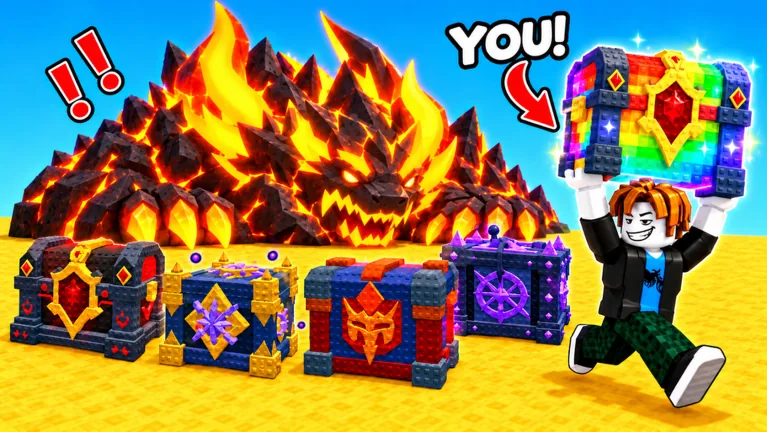
Read the object, then the field
To understand Steal From The Rich crate rarities, check whether the label belongs to a crate or to the treasure you opened. Read each field separately. Crate class, treasure rarity, quality, displayed odds and income describe different parts of what you have found.
Choose the field that answers your immediate question. Read a crate’s timer to see whether it is ready to open. Read a treasure’s income rate to compare it with your display. One rarity word does not answer both questions or replace the rest of the label.
Keep crate class and item details separate
An Uncommon crate can wait beside the APPRAISER, while an Epic Camera shows its own Great descriptor and income label. These examples illustrate separate fields. Do not turn them into a rule that assigns a particular result to every crate class.
Read the label for the step you are on. Follow a waiting crate’s countdown. Once you have opened it, inspect the revealed treasure’s details before comparing it with anything on your plot.
| Field | How to read it |
|---|---|
| Crate class | The class displayed on the crate you acquired |
| Treasure rarity | The rarity stated for the revealed item |
| Quality descriptor | A separate description such as Great or Okay |
| Displayed odds | The item’s visible “1 in” label |
| Income | The dollar-per-second rate shown on the treasure |
The opening crates guide explains the countdown and READY interaction. A rarity label does not skip that opening step.
Compare income using the actual item label
Read the income on the particular treasure you own and compare it with your equipped items. Its name or rarity alone does not tell you which item to replace or whether you need more display space.
Camera and Cash Machine examples each have their own income, quality and odds lines. Treat those values as the labels on those individual items. Another treasure with the same name still needs its own check; the examples are not a permanent price or income list.
The passive income guide explains these display comparisons. Use your current labels rather than a ranking that assigns a fixed income to every rarity, regardless of the treasure’s other fields.
Treat odds labels as labels, not a complete calculator
Treasures can show a “1 in” value. Read it without assuming a shared roll pool, a modifier’s effect or a probability change from collecting Index entries. The label alone does not describe all the rules behind the roll.
You can note the number on your find, but it does not guarantee how many crates you will need to open for another one. To calculate an expected cost, you would also need the relevant pool, current costs and modifier rules.
Use Item Index to check collection progress and claim rewards. Do not treat its progress counters as a luck formula or add them to your odds calculation without a stated game rule.
Recognize milestones without inventing recipes
Secret crates are part of gameplay. The official badge list also names Secret Crate Opened, Eternal Crate Opened and Divine Crate Opened. You can recognize those published milestones without assuming all three work the same way.
Read the current in-game instructions when pursuing a named milestone. A badge name or win percentage does not tell you an acquisition recipe or drop chance. Do not use those statistics to build a complete rarity order or assign every named crate to a particular area.
FAQ
Is a crate class the same as an item’s rarity?
Read them as separate fields on separate objects. Do not assume one crate class maps to a fixed treasure or to every item of a matching rarity.
What does Great mean on a treasure?
It is a quality descriptor separate from rarity and income. Read the other fields before deciding where the item fits in your display.
Can I use a “1 in” label to predict my next opening?
Read it as the displayed odds label. It does not guarantee when you will get the next matching item or explain every probability rule.
Are Secret, Eternal and Divine names real?
The official badge list has opened-crate milestones for all three. Secret crates also occur in gameplay.
Are badge win rates crate drop chances?
Keep badge statistics separate from crate probabilities. Do not substitute a badge win rate for a stated crate drop chance.